
Moving More People With Less Road Space: The Case for High-Capacity Electric Transit
Crowded urban corridors place considerable pressure on public transport systems. During peak periods, passenger demand can rise sharply while road space, terminal capacity, and available service frequency remain limited. Adding more standard buses is not always the most practical response, particularly where traffic congestion already affects journey times.
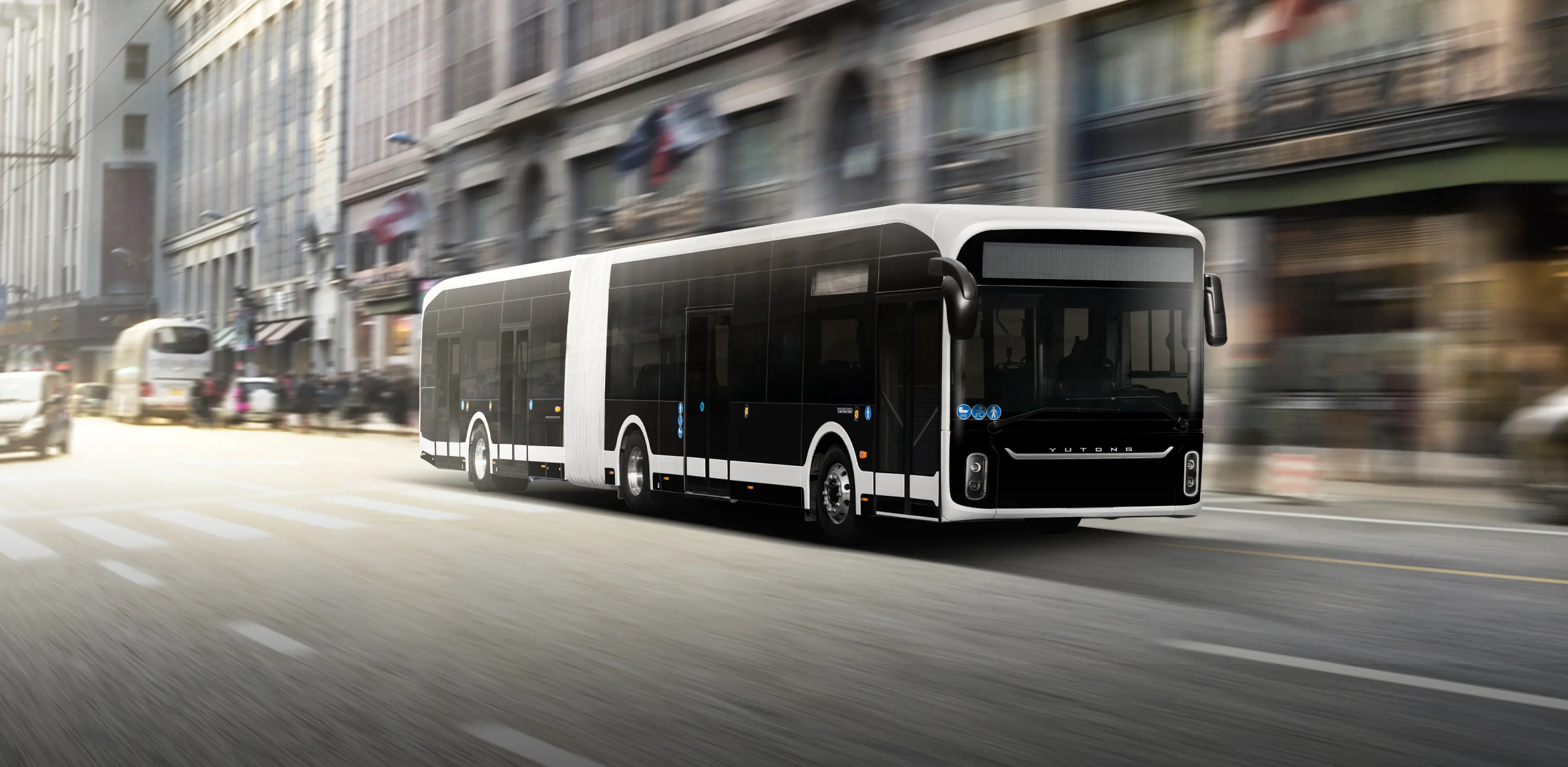
High-capacity electric vehicles offer another approach: carrying more passengers per departure while supporting lower-emission transport. The Yutong U18 provides a reference for examining the engineering and operational considerations behind this approach, while Yutong Bus is among the manufacturers developing electric vehicles for demanding urban networks.
Passenger Flow and High-Capacity Vehicle Design
Passenger capacity is only useful if people can board, move through the cabin, and leave the vehicle without excessive delays. In busy city centres, several passengers may enter or exit at the same stop, making door placement, aisle width, handrails, and interior circulation important design considerations. Poorly arranged spaces can create bottlenecks even when a vehicle has substantial nominal capacity.
Articulated buses offer an alternative to deploying multiple standard-length vehicles. Their extended passenger compartments can accommodate more people within a single vehicle, reducing the number of separate departures required to carry a given passenger volume. However, the additional length also affects turning behaviour, stop design, and the driver’s ability to navigate complex intersections.
Capacity planning should reflect actual passenger distribution rather than a maximum figure alone. Seated and standing occupancy, peak-hour demand, passenger turnover, and accessibility requirements all influence how effectively a high-capacity bus serves a route. The Yutong U18 is an 18-metre battery electric bus designed for main roads in major cities, with capacity for up to 125 passengers. This provides a useful reference for assessing the capacity requirements of high-volume corridors.
Electric Propulsion and Energy Demand
Moving a large number of passengers requires substantial energy, particularly in stop-start traffic. Battery capacity is one part of the equation, but energy consumption also depends on vehicle mass, acceleration patterns, road gradients, traffic conditions, and the use of heating or air conditioning. A high-capacity electric bus must balance passenger demand with the energy available throughout its operating cycle.
Regenerative braking can recover some kinetic energy during deceleration and return it to the battery. This function is relevant to urban routes because buses frequently slow down at intersections and passenger stops. The amount recovered varies according to driving conditions, battery state, and braking demand; it supplements rather than replaces the energy required for propulsion.
Energy planning becomes more effective when operators examine complete route cycles. Passenger loading, average speed, dwell time, elevation changes, and daily mileage help estimate actual consumption. A route with frequent stops may have a very different energy profile from a longer corridor with relatively steady traffic, even if the total distance is similar.
Infrastructure and Network Integration
High-capacity buses require suitable infrastructure beyond the vehicle itself. Stops need enough space for safe boarding and alighting, while terminals must accommodate vehicle length and turning requirements. Road geometry, intersection layouts, lane width, and platform design should all be reviewed before a new vehicle type enters service.
Charging infrastructure introduces another layer of planning. Depot charging can support predictable overnight schedules, but fleet operators must assess electrical supply, charger availability, and the number of vehicles charging at the same time. Opportunity charging may be considered for routes with suitable terminal dwell periods, although its feasibility depends on charger output and timetable flexibility.
A high-capacity electric bus can also affect how a wider network is organized. Transport planners may use it on heavily travelled corridors while smaller vehicles serve neighbourhood routes and lower-demand connections. Such service differentiation can help match vehicle capacity to passenger volumes, reducing the likelihood of running oversized vehicles where demand is limited.
Safety, Accessibility and Daily Operations
Vehicle length and passenger capacity introduce specific operational considerations. Drivers need appropriate visibility and training to manage turns, lane changes, and stopping distances. Articulated configurations also require attention to the movement of the vehicle through intersections and around tight curves, particularly in older urban districts.
Passenger safety depends on both vehicle systems and cabin organization. Handrails, non-slip flooring, clear emergency exits, suitable lighting, and accessible spaces contribute to safer journeys. The arrangement of doors and passenger information systems can also help reduce confusion during busy boarding periods.
Maintenance planning is equally important for keeping high-capacity vehicles available. Electric drivetrains have fewer moving mechanical components than conventional combustion systems, but batteries, high-voltage connections, power electronics, braking systems, and cooling equipment still require regular inspection. Maintenance teams need appropriate diagnostic tools and training, while operators should account for parts availability and service support when planning fleet deployment.
Conclusion
High-capacity electric transit is not simply a matter of fitting more seats into a longer vehicle. Its effectiveness depends on passenger circulation, energy management, road infrastructure, accessibility, and the way services are scheduled across a city.
Yutong Bus develops electric buses for different public transport applications, while the Yutong U18 illustrates how an 18-metre format can address the demands of busy urban corridors. Ultimately, the value of a high-capacity vehicle lies in how well its design, charging arrangements, and operating environment work together to move large passenger volumes efficiently.